



I am not an expert on managing sibling conflict, but I am a mom dedicated to doing the research. In the past week alone, I have had three different conversations with three different mom groups, and somehow the same topic kept coming up: sibling fights.
It seems like such a complicated topic because most of the time, I find myself standing in the middle of what feels like a full-on brawl, wondering: Do I interfere? Do I let them figure it out? Do I stop it immediately? Is this normal? Is this healthy?
I have so many questions, and I know so many moms are in the same boat. I have three kids, ages 14, 10, and 9. Each one has a different personality, a different temperament, and a different way of reacting when they feel frustrated, left out, annoyed, or unheard. And all of that plays a role.
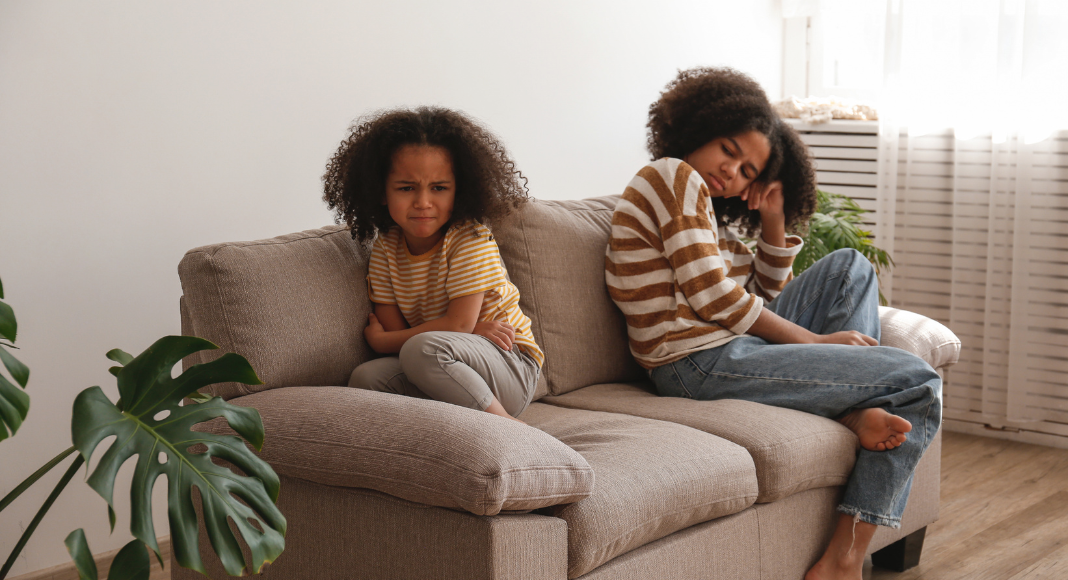 With my background in social work, I went into this research with one hypothesis: siblings will fight, and sometimes they need space to problem solve. But I also wanted to know when parents should step in, how we should step in, and what actually helps children learn conflict resolution instead of just stopping the fight in the moment. Here’s an overview of everything I learned from my research:
1. Pause + assess before jumping in.
One of the most helpful things I found was that not every sibling fight needs the same response. Some moments are bickering, some are power struggles. Some are emotionally intense, and some are unsafe. (If there is hitting, name-calling, intimidation, or one child overpowering the other, step in immediately.)
Letting kids “work it out” does not mean allowing one child to dominate or harm the other. Is anyone physically unsafe? Is one child being repeatedly targeted? Is this typical arguing, or is it becoming aggressive? Are they trying to work it out, or are they escalating?
The American Academy of Pediatrics reminds parents that sibling rivalry is normal, but the goal is to define what behavior is acceptable and what is not. I have found myself in this situation many times, reacting before assessing whether it actually needed my involvement. Most of the time it ends with me feeling frustrated and burned out. Meanwhile, my children already moved on, which often means the situation didn’t need my reaction in the first place.
Being mindful of the specific situation is important, and I continue to remind myself of that. So much of my healing journey centers around pausing instead of simply reacting. Knowing that the first step is to slow down and assess the situation feels reassuring; it’s a skill I’ve already worked hard to develop.
It is important to communicate this step to your children too. Simply telling them, “I’m going to pause before I jump in. Are you both safe? Can you solve this respectfully on your own, or do you need help?” allows them to learn the process alongside you. This encourages them to think critically about the situation, and also helps them develop important problem-solving and conflict-resolution skills that they can carry with them as they grow.
2. Emotion coach before problem solving.
Dr. John Gottman’s emotion coaching approach focuses on helping children name and understand their emotions before trying to fix the problem. The steps include noticing the emotion, seeing it as a chance to connect, listening, naming the feeling, and then setting limits while helping them problem solve.
In sibling fights, this may look like:
- Get low and calm your own body first.
- Name what you see: “You both seem really frustrated.”
- Validate both sides without choosing a winner: “You wanted the toy, and felt like he took it. You wanted a turn and felt ignored.”
- Set the boundary: “I won’t let you hit or scream in each other’s faces.”
- Guide them toward a solution: “What can we do next time when you both want the same thing?”
This approach shifts us from referee to coach. Every mom knows the feeling of playing referee all day long. One child says, “Mom, she started it,” while another insists, “Mom, she hit me first.” The cycle goes on and on, and before you know it, you find yourself constantly stepping in and redirecting.
Instead, I hope to intentionally set the tone as an emotion coach. This step is crucial because it helps us get to the root of what is really happening instead of getting stuck in an endless loop of blame and accusations.
Being an emotion coach is not easy. It requires us to be aware of our emotions while also recognizing and understanding our children’s emotions. It means being able to see the situation from each child’s perspective, which is often key to helping them feel heard and validated. Filling that emotional need may be one of the most important steps in addressing some of the root causes of sibling conflict in the first place.
3. Help each child feel heard.
Dr. Laura Markham, author of Peaceful Parent, Happy Siblings, recommends intervening in a way that helps each child feel heard, reflect on what happened, and hear the other child’s perspective. When I first read this book, I found myself highlighting almost every page because I knew its lessons would be crucial in shaping how I support and nurture my children’s relationship with one another.
A step-by-step approach to this looks like:
- Stop unsafe behavior: “I won’t let you hit.”
- Separate if needed: “We’re going to take a minute to calm our bodies.”
- Let each child speak without interruption: “I want to hear from each of you. One person talks, then the other.”
- Reflect back what you heard: “So you felt left out when they started playing without you.”
- Ask: “What do you think your sibling was feeling?”
- Help them repair: “What can you do to make this right?”
The goal is not forced apologies, because we all know that a child who simply says “sorry” doesn’t always mean it. Sometimes, our immediate reaction is simply to tell them to “say sorry” so we can move on. However, the goal is more than just to “say sorry”; it is repair, reflection, and responsibility.
I really wish I had read this book sooner. There were so many “aha” moments throughout it. My biggest takeaway was learning how to be less judgmental and more gentle in my approach. In the midst of a sibling conflict, we can often feel triggered ourselves. I’m learning that it’s okay to step away, regulate my own emotions, and then come back to the situation with a calmer perspective. Doing so allows me to repair and respond in a way that is healthier for both myself and my children.
4. Create family rules before the fight happens.
One of the biggest takeaways from the research is that we cannot expect kids to problem solve well in the middle of emotional chaos if we never taught the skill when everyone was calm. Child Mind Institute recommends setting clear ground rules ahead of time, especially around common triggers like sharing, screen time, turns, space, and parental attention.
Family meetings are a big part of our family. When I find myself repeatedly redirecting my children on the same issue, I know it is time to address the underlying problem rather than continue managing the symptoms. The best way I have found to do this is by bringing everyone together to brainstorm solutions as a family.
Children are far more likely to follow rules they helped create. They feel heard, valued, and part of the solution rather than feeling lectured or talked at. These meetings also give everyone an opportunity to share their perspective in a safe and respectful way.
During our family meetings, we discuss questions such as: “What are the things we fight about the most?” “What rule would help us handle this better?” and “What should we do when two people want the same thing?” Together, we come up with solutions that everyone can agree on and commit to following.
Some important ground rules that we have established in our own family meetings include:
- In our family, we can be mad, but we cannot hit.
- We can disagree, but we cannot call names.
- If two people want the same thing, we use a timer, take turns, or make a plan.
- If you need help, you can ask for a parent before it becomes a fight.
What I’m Taking Away
After reading the research and thinking through what I want to practice in my own home, I feel a little more grounded in how to approach sibling conflicts. Some main action steps I’ve learned include:
- I will step in when there is physical aggression, repeated targeting, or emotional harm.
- I will continue allowing space for problem-solving when the conflict is minor and they seem capable of working through it.
- I will make adjustments by teaching conflict-resolution skills when everyone is calm, not only when everyone is already escalated.
- I will also remind myself that my job is not to prevent every argument. My job is to help my kids learn how to argue, repair, listen, and respect each other.
Every household has a different dynamic, and every child is different. What works for one family may not work for another. So I’m leaning into flexibility. I’m trying new approaches. I’m reminding myself that sibling conflict does not mean I am failing as a mom. It means my children are learning how to be in relationship with each other, and will one day carry these skills into their personal relationships. I also want to remind myself and other moms that like most parts of motherhood, we are learning right alongside them.